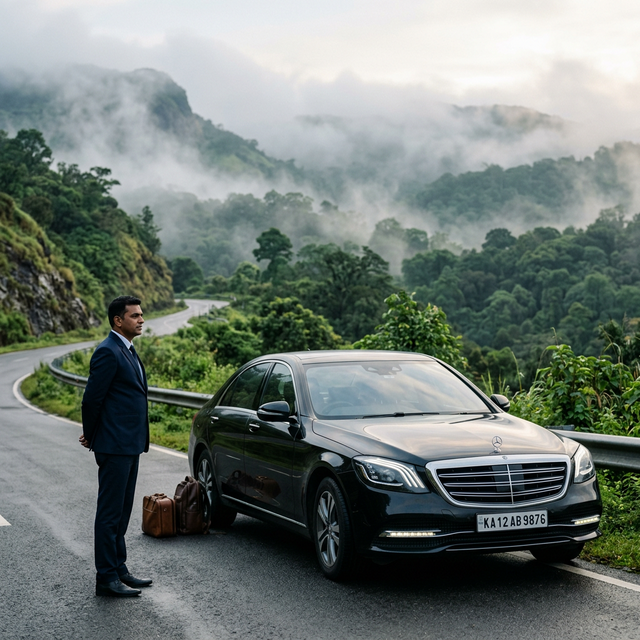
"Hiring a driver for a long-distance road trip isn't just about finding someone who can steer; it's about securing a guardian for your family's safety on the unpredictable highways of Southern India."
Bangalore is the gateway to some of India's most breathtaking landscapes—from the misty peaks of Coorg to the heritage-rich streets of Mysore and the wild trails of Wayanad. While the prospect of a road trip is exhilarating, the reality of navigating 300+ kilometers of highway, winding ghat roads, and aggressive inter-state traffic can dampen the holiday spirit. This is why more Bangaloreans are switching to professional outstation driver rentals.
1. The Legal & Identity Foundation
Before you even discuss the route, you must establish the legal standing of your driver. A "clean" driver on paper is the first line of defense. At OneD, we mandate a multi-stage vetting process, but if you are hiring independently, here is what you must check:
- Commercial vs. Private License: For outstation trips, a driver with a Commercial License (Yellow Plate Badge) often has better training for long hauls, though a private license is legally sufficient for your personal car.
- Original ID Verification: Never accept a photocopy. Verify the original Aadhaar and License.
- Police Verification: In a city like Bangalore, professional agencies provide a police-verified certificate. This is non-negotiable for family safety.
2. Evaluating Professional Experience
Highway driving is a different beast compared to city crawling. Use these questions to gauge their expertise:
- Ghat Road Experience: If you're heading to Ooty or Munnar, ask about their experience with hairpin bends. These roads require specialized engine braking techniques to prevent brake fade.
- Night Vision & Stamina: Night driving on Indian highways requires an acute ability to read high-beam signals and anticipate unlit obstacles (like livestock or stalled vehicles).
- Language Proficiency: Ensure the driver speaks a language you are comfortable with (Kannada, Hindi, or English) to communicate during emergencies.
3. Technical Vehicle Readiness
A professional driver should also be your car's temporary mechanic. A true professional will perform a pre-trip inspection including:
The "FLUID" Check: Fuel, Lubricants (Engine Oil), Ulterior (Brake fluid), Immobilizer (Battery), and Dash (Warning lights). If they don't know where the coolant reservoir is, they aren't the right fit for your outstation journey.
4. Communication and "Road Manners"
Outstation trips often involve 6 to 12 hours of shared space. Etiquette matters. Professional drivers understand the "Invisible Driver" philosophy—being present for safety but allowing the family their private moments.
Discuss the following before departure:
- Speed Limits: Explicitly state that safety trumps time. A steady 80-90 km/h is far safer than erratic 120 km/h bursts.
- Rest Intervals: For every 3 hours of driving, a 15-minute break is mandatory to prevent driver fatigue.
- Tobacco/Alcohol Policy: A strict zero-tolerance policy for substances must be established.
5. Technology & Navigation Literacy
Modern outstation travel relies heavily on GPS and real-time traffic data (Google Maps/Waze). Ensure your driver is tech-savvy enough to navigate closures or suggest better routes based on live data, rather than just "instinct."
6. Emergency Protocols
What happens if a tire bursts at 2 AM near Bandipur? Or if the engine overheats in the middle of a forest? A professional outstation driver should:
- Know how to change a tire on your specific vehicle model.
- Have a list of highway patrol numbers (1033).
- Know how to place hazard triangles correctly.
Summary Checklist for Your Next Trip
| Priority | Item |
|---|---|
| High | License & Police Verification Check |
| High | Ghat Road & Highway Experience Proof |
| Medium | Night Driving Rest Schedule |
| Medium | Vehicle Fluid & Tire Pressure Audit |
| Low | Uniform & Hygiene Standards |
Hiring a driver through a managed service like OneD eliminates 90% of these manual checks. We automate the vetting, monitor the trips, and provide backup drivers in case of emergencies, allowing you to focus on what matters: the journey itself.